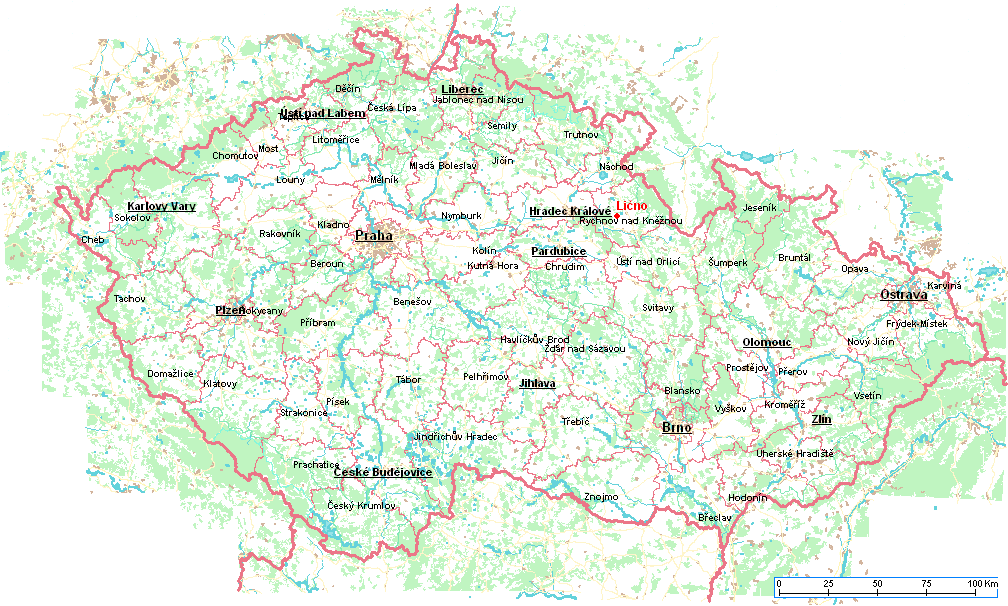
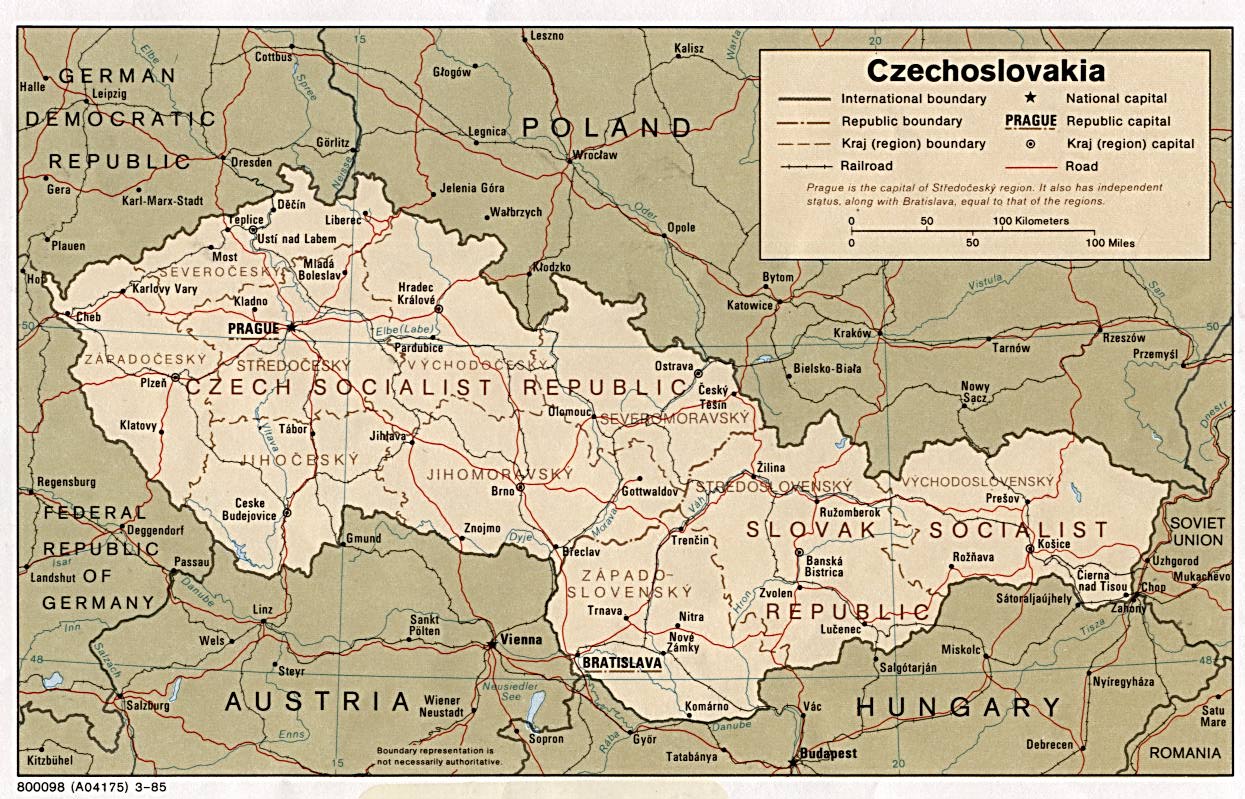
Did you know that the western part of the Czech Republic (approximately up to the
Jihlava-Jeseník line on the above map) is called
Bohemia (after the Latin name of a Celtic tribe of
Boii that used to inhabit this area in antiquity), and the eastern part
Moravia? Everybody speaks about the same, Czech, language in both parts, thus the whole is called the Czech Lands, or Czechia, which is slowly becoming
a generally accepted short name for the Czech Republic. I used to wonder whether the other meaning of the words
Bohemia,
Bohemian,
Bohemianism denoting a certain unconventional, artistic
lifestyle had its origin in the way of life of the old Czechs, or of their predecessors, the Celtic Boii.
Actually, neither from one nor the other: it originated from the wandering lifestyle of the
Gypsy (Roma) musicians and entertainers who were migrating into
the western half of Europe in the 15th century, because Roma were called Bohemians when they first
arrived in France: They came to Europe from India through Egypt and Greece. Their presence on the
territory of Bohemia was reliably recorded for the first time in 1416 (although some researchers
suggest that they got there as early as in 1260) and then continued on to the West Europe.
15th century was the "golden age of Gypsies in Europe" when they were being received by aristocrats
and given letters of protection and other privileges. And so it happened that they first arrived
to France with a
letter of protection issued on
April 17th, 1423 by the Holy Roman Emperor and Czech King, Zikmund. Because it was issued in
the Czech Lands (La Bohême) and by the Czech King (roi de Bohême), the French people
named the newcomers "les bohémiens". This name for the Roma has survived in French for
a long time, see
les bohémiens
en voyage or the
1857 poem by Charles Baudelaire.
The territory of the Czech Republic is almost identical with that of the historical Czech Kingdom which had been for the last approximately 300 years of its legal existence, until 1918, a part of the Austro-Hungarian Empire. From 1918 till 1992, Czech Lands together with Slovakia, which lies east of Moravia, constituted the Czechoslovak Republic.